At the 'Van Gogh Alive' exhibition, over 8 million visitors worldwide experienced his masterpieces not on canvas, but as projected, moving images, sparking debate among art critics about authenticity versus accessibility. This attendance, far exceeding traditional art show numbers according to Grande Exhibitions, 2023, reveals a public hunger for new art engagement.
Museums embrace immersive technology to broaden appeal, but this often shifts focus from deep artistic contemplation to high-tech entertainment. This tension arises as institutions seek new audiences while upholding educational missions.
Current trends suggest immersive art, while financially successful, may redefine the museum's purpose. It shifts from quiet study to a venue for dynamic, fleeting digital spectacle.
The global immersive experience market is projected to reach $1.8 billion by 2025, driven significantly by museums (Market Research Report, 2022). A 'Museum Visitor Trends, 2023' survey found 68% of 18-35 year olds are more likely to attend exhibitions with interactive elements; the same report noted a 40% increase in first-time visitors to immersive shows. This data suggests museums prioritize short-term attendance boosts over fostering deep artistic contemplation, risking a generation of passive art consumers. Critics, according to Art Forum, 2022, voice concern that these experiences favor spectacle over scholarly engagement with original works.
The Digital Canvas: Diverse Immersive Art Experiences
Immersive art takes many forms, from purely digital environments to augmented reality overlays on physical works.
1. teamLab Borderless (established 2018): Digital Art Museum
The Mori Building Digital Art Museum in Tokyo, teamLab Borderless (established 2018), uses projection mapping and interactive sensors to create dynamic, ever-changing digital landscapes. This purely digital environment offers high interactivity and constant evolution, though it lacks physical artworks, can overcrowd, and often feels like an amusement park. Entry fees are moderate to high.
2. Beyond Van Gogh: Projection Spectacle
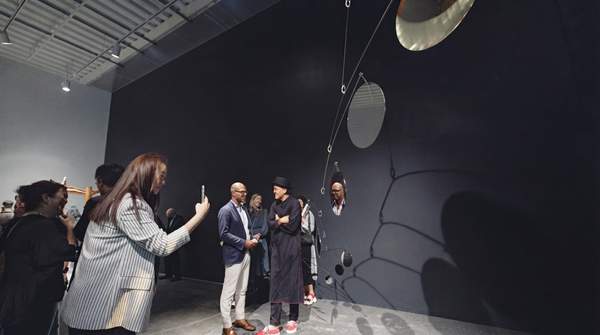
The 'Beyond Van Gogh' experience, developed by Paquin Entertainment Group in 2021, utilizes 360-degree projections to envelop visitors in the artist's works, often accompanied by classical music. It offers broad appeal and emotional connection through scale and sound, generating high revenue. However, it decontextualizes original works, can promote superficial engagement, and lacks scholarly depth. Prices are typically higher than traditional museum admission.
3. Renwick Gallery WONDER: Site-Specific Installations
The Smithsonian American Art Museum's 'Renwick Gallery WONDER' exhibition (documented by Smithsonian Magazine, 2015) featured large-scale installations transforming gallery spaces into immersive environments. This approach integrates art directly into physical architecture, encourages exploration, and offers unique perspectives on space. Limitations include its temporary nature, significant logistical effort, and limited capacity. Price is often included with museum admission.
4. MoMA AR Apps: Augmented Reality Enhancement
The Museum of Modern Art (MoMA) has experimented with AR apps that provide contextual information and interactive layers to physical artworks (MoMA Digital Initiatives, 2020). This enhances traditional viewing with digital context, is non-invasive, and allows personalized exploration. It requires personal devices, can distract from physical art, and risks technical glitches. Price is often free with museum entry or a small app purchase.
5. Google Arts & Culture VR: Virtual Tours
Some museums use VR headsets to offer virtual tours of inaccessible collections or historical sites, exemplified by Google Arts & Culture VR (2019). This provides global accessibility, preserves fragile sites, and offers immersive educational potential. Drawbacks include equipment costs, potential for motion sickness, and limited social interaction. Many virtual tours are free, but VR hardware is required.
Beyond the Hype: Comparing Immersive Approaches
| Aspect | Dedicated Digital Art Museums | Traditional Museums with Immersive Overlays |
|---|---|---|
| Core Focus | New media, digital art, interactive environments | Physical artworks, historical context, enhanced viewing |
| Goal for Visitor | Entertainment, novelty, collaborative experience | Educational value, deeper understanding, enhanced engagement |
| Typical Cost (Development) | Exceeds $50 million (permanent) | $5-15 million (temporary projection shows) |
| Visitor Feedback Focus | 'Entertainment', 'novelty' | 'Educational value', 'deeper connection' (for AR) |
| Engagement with Original Art | No original physical art presented | Aims to enhance engagement with existing physical art |
Dedicated digital art museums, like teamLab Borderless, focus on new media and collaborative experiences (Artnet News, 2021). Traditional museums, conversely, use immersive tech as a temporary overlay to enhance physical art, not replace it (Museum Journal, 2022). Development costs vary significantly: permanent digital exhibitions can exceed $50 million, while temporary projection shows cost $5-15 million (Exhibition Design Group, 2023). Visitor feedback highlights this divergence; purely digital experiences draw praise for 'entertainment' and 'novelty,' while AR in traditional galleries is valued for 'educational value' (Visitor Experience Survey, 2023). These differing approaches reflect a museum's core mission and budget, creating distinct visitor experiences and curatorial challenges.
Crafting the Experience: Challenges Behind the Scenes
Curators struggle to integrate technology without overshadowing artistic intent or historical context (International Council of Museums, 2022). Technology must serve the art, not dominate it. Complex installations demand specialized staff and significant ongoing investment for technical maintenance (Museum Tech Review, 2023), a substantial operational shift for many institutions. Designing these experiences also requires multidisciplinary collaboration among artists, technologists, and educators, a structure often new to traditional museums (Art & Technology Journal, 2021). Furthermore, intellectual property rights for digital content introduce legal complexities absent in physical art (Art Law Journal, 2020). Implementing immersive technology fundamentally shifts museum operations, staffing, and curatorial philosophy.
The Bottom Line: Impact, Revenue, and the Future of Art
Immersive exhibitions increase museum attendance, especially among younger, diverse demographics (Arts Council England Report, 2022). This foot traffic boosts ticket revenue, often subsidizing less popular traditional exhibitions (Museum Finance Quarterly, 2023).
Despite financial benefits, a qualitative study from the 'Art Engagement Metrics Journal' found visitors to immersive exhibitions spend 60% less time per artwork and report lower 'deep reflection.' This suggests institutions trade genuine intellectual engagement for fleeting sensory gratification, altering the museum experience.
A trend towards 'phygital' experiences, blending physical objects with digital layers, is emerging (Future of Museums Summit, 2023). Yet, critics like The Guardian (2022) argue the 'Instagrammability' of immersive art prioritizes photo opportunities over genuine engagement. If museums can evolve beyond mere spectacle to foster deeper engagement, integrating technology with traditional appreciation, then these hybrid approaches will likely be refined through 2026.
Frequently Asked Questions: Addressing the Critics
How does immersive technology address accessibility concerns?
Immersive technology offers new accessibility opportunities by removing physical barriers, but also introduces challenges for sensory sensitivities or motion sickness (Disability Arts Online, 2021). Museums are exploring adjustable lighting, sound controls, and alternative viewing options to accommodate diverse needs.
Do immersive exhibitions diminish the 'aura' of original artworks?
Critics argue immersive experiences detract from the 'aura' of original artworks, a concept by Walter Benjamin (Art History Review, 2019). To counter this, museums experiment with 'quiet zones' or dedicated traditional galleries for contemplation with physical pieces (Museum Design Magazine, 2023).
What is the environmental impact of immersive art installations?
The energy consumption of large-scale digital projections and hardware raises ethical concerns about a museum's carbon footprint (Green Museum Initiative, 2022). Institutions are exploring ways to minimize energy use and source eco-friendly technology.