Iconic Public Art Installations Redefining Urban Spaces

In London, a field of colorful, flower-like sculptures by Yuri Suzuki allows passersby to create music simply by interacting with them, transforming a public space into a spontaneous concert hall.

MR
Matteo Ricci

April 16, 2026 · 6 min read

Diverse group of people interacting with colorful, glowing flower-like sculptures in a modern urban square, creating music and visible sound waves.

In London, a field of colorful, flower-like sculptures by Yuri Suzuki allows passersby to create music simply by interacting with them, transforming a public space into a spontaneous concert hall. This installation, known as 'Sonic Bloom', debuted in 2021 and actively invited engagement, moving beyond passive observation to create a shared, auditory experience for urban dwellers.

Public art was once considered an immeasurable civic amenity, but it is now a quantifiable driver of urban foot traffic and economic value. This shift challenges long-held beliefs in art's subjective worth, repositioning it as a strategic investment.

Cities and developers that strategically integrate interactive, data-informed public art will gain a significant competitive advantage in attracting residents, businesses, and tourism. This approach transforms urban spaces into vibrant economic engines, directly influencing human movement and engagement.

Historically, measuring public art's value was speculative, but Nowartpublic confirms data-driven proforma assessments are possible. Interactive installations, by reacting to proximity or movement, introduce behavioral triggers into the public realm, notes urdesignmag. This transforms art from static decoration into a dynamic, interactive experience, strategically leveraged for urban development and recognized as a primary driver of economically viable urban environments.

Iconic Installations Redefining Public Engagement

The historical perception of public art as an immeasurable civic amenity is now a dangerous misconception. Interactive installations prove art can be a direct, measurable economic engine, transforming passive environments into vibrant, participatory community spaces.

1. LA Metro's D Line Extension Art Program

Best for: Urban commuters and transit-oriented development.

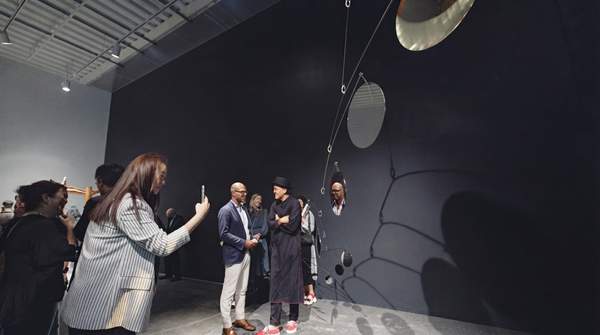
The first three stations of LA Metro's D Line Extension (Wilshire/La Brea, Wilshire/Fairfax, and Wilshire/La Cienega) are are set to open on May 8th, 2026, adding 3.92 miles to the D Line, according to Kengonzalesday. Metro has commissioned public art for its transit stations since 1989, a practice that has continued. Mark Dean Veca's artwork concept for the station platform draws from art deco details and geology, integrating artistic expression directly into daily infrastructure use. The long-standing commitment to integrating art into infrastructure demonstrates a civic priority for aesthetic enhancement, even if its economic ROI is less direct than interactive pieces.

Strengths: Expansive reach across a major urban transit system; permanent integration into public infrastructure; enhances daily commuter experience. | Limitations: Primarily a passive viewing experience for commuters; direct economic ROI may be harder to isolate compared to interactive pieces. | Price: Integrated into major infrastructure project costs.

2. Boston Public Library Skyline Mosaic

Best for: Cultural institutions and historical urban narratives.

The Boston Public Library's Central Library features a mosaic of the Boston skyline crafted entirely from hardcover books, according to arrowstreet. This unique material use creates a memorable visual experience within a civic building. The installation enhances the library's cultural identity, proving that even non-interactive art can deeply embed a sense of place within civic institutions.

Strengths: Unique material use creates a memorable visual; enhances cultural space identity; promotes appreciation for both art and literature. | Limitations: Static installation, limited direct interaction; impact on foot traffic is localized to the library itself. | Price: Specific cost not publicly available.

3. Sonic Bloom by Yuri Suzuki

Best for: High-traffic urban plazas and community engagement initiatives.

Sonic Bloom, Yuri Suzuki's 2021 interactive sound installation in London, allowed participants to create music using colorful, flower-like sculptures. Sonic Bloom directly demonstrates how interactive public art introduces 'behavioral triggers' that actively influence human movement and engagement, transforming a public space into a spontaneous concert hall, according to Aestheticsofjoy. It offers a clear model for high-impact community engagement.

Strengths: High level of public interaction and participation; direct influence on foot traffic and dwell time; fosters community engagement through shared experience. | Limitations: Temporary installations require ongoing maintenance and relocation; potential for noise disruption in certain urban contexts. | Price: Varies per installation and duration.

A Spectrum of Artistic Approaches and Materials

While 'aestheticsofjoy' and 'arrowstreet' describe a range of public art, including static pieces like the codfish mural, 'nowartpublic' and 'urdesignmag' emphasize that interactive installations and measurable foot traffic are key to demonstrating economic value. A critical distinction is that not all public art contributes equally to urban economic uplift, making interactive pieces a more direct driver of quantifiable value.

Public art utilizes a vast array of materials and forms, from intricate, locally inspired murals to subtle urban interventions. A public art mural at 255 State Street in Boston, inspired by codfish, was created using 900 pounds of tumbled sea glass, according to arrowstreet. This exemplifies the diversity in material and approach.

Installation NameType of EngagementPrimary Material/MediumKey Urban Impact
Sonic BloomInteractive (Sound/Movement)Metal, Electronics, LightIncreased foot traffic, active community participation, economic uplift
LA Metro's D Line Art ProgramIntegrated (Visual/Environmental)Various (e.g. Ceramics, Paint, Mixed Media)Enhanced commuter experience, civic pride, improved transit environment
Boston Public Library Skyline MosaicStatic (Visual/Interpretive)Hardcover BooksCultural enrichment, institutional identity, unique aesthetic
Codfish Mural (255 State Street, Boston)Static (Visual/Thematic)Tumbled Sea GlassLocal identity, aesthetic enhancement, place-making

Quantifying Art's Value: New Metrics for Urban Impact

With Nowartpublic asserting foot traffic as a key ROI measure, urban planners prioritizing interactive installations like 'Sonic Bloom' are actively engineering economic uplift, not just beautifying spaces. This quantifiable impact provides concrete evidence of art's direct contribution to urban revitalization, moving beyond traditional subjective valuation.

The elevation of interactive public art to a recognized urban development category stems from its shift to data-driven ROI, particularly through foot traffic analysis. Awards like 'Public Space of the Year' for installations such as 'Urban Grove' validate this trend, confirming art's measurable impact on urban environments and community engagement, solidifying its status as a strategic investment.

The Strategic Imperative of Public Art Investment

The measurable economic impact of interactive public art makes the historical perception of art as an immeasurable civic amenity a dangerous misconception. The evolution from purely aesthetic public art to dynamic, interactive installations marks a fundamental shift in urban planning, prioritizing active engagement and measurable economic impact. While art in institutions like the Boston Public Library shapes civic identity, the strategic imperative now lies in leveraging interactive art for tangible urban revitalization. Developers who prioritize such installations are likely to gain a competitive edge through increased foot traffic and community engagement.

Common Questions About Public Art's Role

While contemporary art pushes boundaries with interactivity, historical installations like 'Les Deux Plateaux' demonstrate public art's enduring power to provoke thought and redefine iconic urban landmarks over decades.

What defines a truly successful public art installation in an urban setting?

A successful public art installation in an urban setting often integrates local context, encourages interaction, and provides measurable benefits like increased foot traffic or community dwell time. It moves beyond purely aesthetic appeal to actively influence human behavior and contribute to the economic vitality of the space.

How long do public art installations typically remain relevant or impactful?

The relevance and impact of public art can vary significantly. While temporary interactive pieces like 'Sonic Bloom' aim for immediate engagement, historical installations from 1985 aimed for lasting impact, and installations such as Les Deux Plateaux (also known as Colonnes de Buren) by Daniel Buren in Paris, installed in 1985 with 260 black-and-white striped columns, have maintained their status as enduring landmarks for decades, according to Aestheticsofjoy.

Are there different forms of public art that contribute to urban spaces beyond direct interaction?

Yes, while interactive art is gaining prominence for its measurable economic impact, static forms like murals and sculptures continue to contribute significantly to urban environments. These pieces often enhance aesthetic appeal, reflect local culture, or provide historical context, shaping civic identity and enriching the visual landscape even without direct physical interaction.