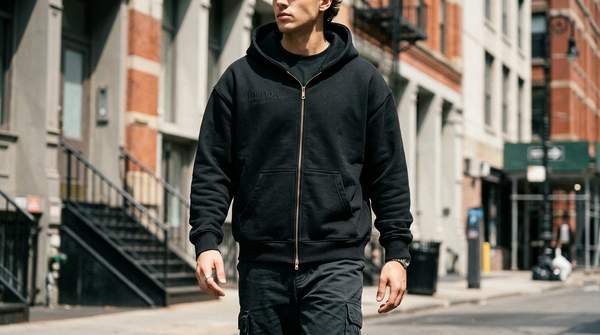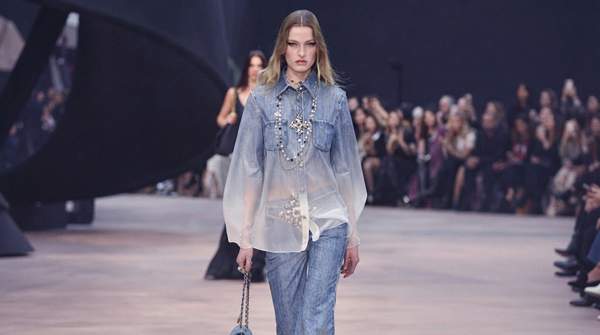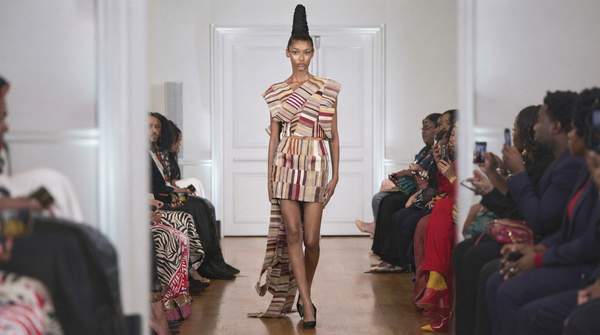
The decline of occasion-specific dressing is not the result of a single trend. It is the product of three converging forces: blurred boundaries between work, leisure and social life; a social media culture that rewards dressing for the camera rather than for the calendar; and a long historical preference for comfort and versatility that predates the internet entirely. Understanding how these forces interact explains both why consumers stopped sorting their wardrobes by event and how the industry is responding.
The Fading Lines of Occasion Dressing
For most of the twentieth century, clothing was organized around occasions: office wear, evening wear, weekend wear, sportswear. That structure assumed a life divided into distinct blocks of time and place. As trade reporting on the trend has observed, people rarely move through their days in neatly separated categories anymore, and their clothes no longer have to either. Getting dressed is becoming less about matching a single occasion than choosing pieces that can move with the day as it changes.
This is the practical core of the shift. A commuter who exercises before work, takes a midday call from a café and meets friends in the evening cannot change outfits three times. The wardrobe has to do the transitioning instead, which is precisely the gap the fashion industry is now trying to fill with new product language and new categories.
Sociological Drivers: Blurred Lifestyles and the 'Hybrid Core'
The clearest industry articulation of this change is the concept "Hybrid Core," described in WWD's reporting as less a seasonal look than a response to a schedule in which the boundaries between work, leisure and social life are less fixed. The concept names something already familiar in everyday life: hybrid work arrangements, flexible hours and blended social plans have dissolved the assumption that a garment belongs to one context.
WWD's reporting identifies specific scenarios within the trend. "After Sport" pairs a fitted base with a casual sporty jacket and retro accessories for sport-to-street dressing, reflecting the way exercise now sits alongside commuting, social plans and the rest of daily life. "Cozy Glam" brings at-home comfort out with soft knit layers, lounge bottoms and decorative details. Both scenarios treat versatility as the primary design requirement rather than occasion-appropriateness.
Technological Influence: Dressing for Content on Social Media
The second force is technological. Platforms like TikTok have accelerated a culture of microtrends, in which garments gain visibility through virality rather than through their fit with a social setting. Trend tracking by Vogue Business journalists Lucy Maguire and Joe Bobowicz documents how comfort-led categories spread on the platform: the hashtag #WirelessBra, with over 243,600 posts, positions functional lingerie as essential, a shift the tracker describes as mirroring "a larger shift away from rigid dress codes."
The same tracker notes that even formal codes are being reworked rather than abandoned: #StarchedJeans shows stiff denim reimagined as a styling choice that delivers a crisp, formal look with the added benefit of durability. The dress code survives as an aesthetic, but it is chosen by the wearer for content, not imposed by the occasion.
Historical Context: The Enduring Appeal of Comfort and Versatility
The third force long predates the smartphone. A semiotic analysis of the shift dress traces the garment to the 1920s chemise, whose simple cuts, loose shapes and minimal waist definition marked a move away from corsets that, in the paper's account, offered women both style and ease of movement. The shift dress's enduring place in the American wardrobe, the paper argues, reflects cultural values stretching from the democratic ideals of the eighteenth century to the ready-to-wear sportswear industry of the mid-twentieth century.
In other words, the preference for versatile, comfortable clothing is not new; it has a documented century-long trajectory. What has changed is the removal of the social structures—fixed offices, formal events, codified public spaces—that once overrode that preference.
The Multi-Factor Model of Declining Occasion Dressing
The three drivers can be separated analytically even though they reinforce one another. The table below deconstructs the trend into its component forces, their impact on dressing behavior, and the industry's response.
| Driver | Impact on Dressing | Industry Response |
|---|---|---|
| Blurred lifestyle boundaries | Garments must transition across work, leisure and social contexts in a single day. | "Hybrid Core" collections with scenarios like "After Sport" and "Cozy Glam" (WWD reporting). |
| Social media influence | Microtrends and visual virality replace occasion-appropriateness as the driver of purchases. | Products designed to photograph well and function across body types and uses. |
| Historical preference for versatility | Long-standing cultural value on ease of movement over restrictive, occasion-bound garments. | Continued revival of flexible, ready-to-wear sportswear principles. |
Read together, the framework shows that the shift away from occasion dressing is not one trend but a convergence: a practical need for multi-context clothing, a technological incentive to dress for the camera, and a historical pull toward comfort that was always present in the wardrobe.
Fashion Industry's Adaptation: New Categories for a New Era
The industry's response has been to formalize the blur. "Hybrid Core" is a marketing concept, but it names a real change in how products are designed and sold: pieces that support movement and changing conditions while carrying a performance sensibility into more polished looks. WWD's reporting notes that TikTok Shop sales figures suggest shoppers on that platform are buying products designed to work in more than one way, though those figures are specific to the platform rather than the industry as a whole.
The same reporting projects that the next fashion shift may be less about finding a completely new look and more about finding new ways to wear what already works—a formulation that captures the industry's strategic pivot from occasion-based merchandising to versatility-based merchandising.
Adapting to the New Norm of Versatile Style
Consumers and the fashion industry should recognize and adapt to the ongoing cultural shift towards versatile, comfort-driven, and content-friendly dressing. The measurable indicator to watch is continued growth in 'Hybrid Core' product lines and marketing, alongside the sustained influence of social media trends on everyday fashion choices. If occasion-based merchandising keeps receding while multi-scenario categories keep expanding, the three-force model will have explained not just a mood but a durable restructuring of how clothing is made, marketed and worn.