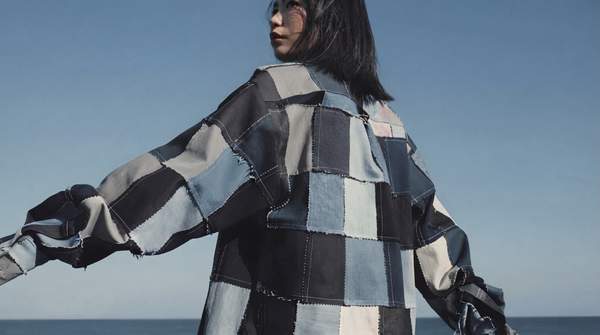
A single haute couture gown can demand over 1,000 hours of meticulous craftsmanship. These garments routinely exceed $100,000, a testament to their artistry and detail. This bespoke production defines an exclusive, yet profoundly influential, segment of fashion.
Haute couture pieces demand thousands of hours of labor and cost upwards of $100,000. Yet, this ultra-exclusive market is projected for significant growth, potentially tripling in value by 2032. This paradox reveals a unique economic function, extending far beyond direct sales.
Based on consistent market growth projections and its unique cultural positioning, haute couture appears poised to solidify its role. It stands as a powerful, albeit exclusive, driver of innovation and aspiration within the global luxury fashion industry. Its historical evolution continues to shape contemporary fashion and culture.
Beyond the Seams: Defining Haute Couture's Cultural Economy
Haute couture, a term protected by French law, refers to custom-fitted clothing made by hand from start to finish. These garments use high-quality, expensive, often unusual fabric, sewn with extreme attention to detail. The stark contrast between haute couture's multi-billion dollar market valuation and its tiny physical output suggests a strategic investment. Luxury houses deploy these 'ambivalent cultural economies' (Tandfonline) as high-ROI marketing vehicles. This leverages exclusivity, cultivating desire and influencing trends far beyond the runway.
An 'ambivalent cultural economy' generates value not from sales volume, but from symbolic capital. Haute couture maintains its mystique and desirability among the ultra-wealthy through carefully managed exclusivity. This strategic positioning reinforces its market value and amplifies its influence.
The Current State of an Exclusive Market
The haute couture market was valued at USD 1.20 Billion in 2024, according to Verified Market Research. Yet, Cognitive Market Research reported the global market at $2427.82 Million in 2021, approximately $2.43 Billion. This significant discrepancy in baseline figures suggests a lack of standardized methodology. Precise financial forecasting for haute couture remains challenging.

North America's haute couture market was valued at $574.03 Million in 2021, according to Cognitive Market Research. North America's $574.03 Million market contribution in 2021 underscores the global reach of bespoke luxury. It suggests that even in a niche, haute couture's influence transcends geographic boundaries, shaping consumer aspirations worldwide.
Influence Beyond the Runway: Haute Couture's Broader Impact
Haute couture's primary value extends beyond direct garment sales. It acts as a powerful engine for brand prestige across the broader luxury industry. The extreme inefficiency of its production—over 1,000 hours and upwards of $100,000 per garment—is paradoxically a core driver of its projected market growth. Its true value stems from scarcity and symbolic capital, not volume sales.
Luxury houses invest in haute couture shows to establish creative vision and set aspirational benchmarks. These collections influence ready-to-wear lines, accessories, and beauty products. These collections influence ready-to-wear lines, accessories, and beauty products, driving aspirational consumption across the wider sector. Such strategic investment in high-artistry garments generates a high return on investment through enhanced brand image and broader market appeal.
Why This Niche Market Drives Global Trends
The haute couture market size is projected to reach USD 3.40 Billion by 2032, as reported by Verified Market Research. In contrast, Cognitive Market Research projects the global market to reach $2877.67 Million by 2026 and $3650.78 Million by 2033. Verified Market Research projects the market to reach $3.40 Billion by 2032.
Despite astronomical labor costs and individual price tags, the haute couture market's projected growth from $1.20 Billion in 2024 to $3.40 Billion by 2032 (Verified Market Research) reveals its true economic value. This value lies not in direct sales volume, but in its unparalleled ability to elevate brand prestige and drive aspirational consumption across the broader luxury sector. The projected growth from $1.20 Billion in 2024 to $3.40 Billion by 2032 (Verified Market Research) affirms haute couture's enduring economic relevance.
Common Questions About Couture's Future
What is the difference between haute couture and ready-to-wear?
Haute couture garments are custom-made for individual clients, requiring multiple fittings and thousands of hours of hand-sewing. Ready-to-wear, conversely, refers to factory-made clothing sold in standardized sizes, produced in larger quantities for a broader market. The former emphasizes unique artistry, while the latter focuses on accessibility and scale.
Who are the most influential haute couture designers?
Historically, figures like Charles Frederick Worth, considered the father of haute couture, and later Coco Chanel and Christian Dior shaped the industry. Contemporary designers such as John Galliano for Maison Margiela and Virginie Viard for Chanel continue to define modern haute couture, pushing boundaries in craftsmanship and artistic expression.
What are the key characteristics of haute couture?
Key characteristics include bespoke creation for individual clients, meticulous hand-sewing, and the use of rare, exquisite fabrics. Adherence to strict guidelines set by the Chambre Syndicale de la Haute Couture is paramount. Each piece is a unique work of art, often requiring hundreds or thousands of hours of labor. The global haute couture market's projected Compound Annual Growth Rate of 3.458% from 2022 to 2034, according to Cognitive Market Research, confirms sustained demand for this bespoke luxury.
Given its consistent market growth projections and its unparalleled ability to drive brand prestige, haute couture appears likely to remain a powerful, if exclusive, engine of innovation and aspiration within the global luxury fashion industry for decades to come.