Culture

Hungary Votes Amid Record Turnout, Shaping Orbán's Future

By midday Sunday, a record 37.

EV
Eleanor Voss

April 12, 2026 · 4 min read

Hungarian citizens gathered in front of the Parliament building, awaiting election results that will determine Viktor Orbán's political future.

By midday Sunday, a record 37.98% of eligible Hungarians had cast their votes, approximately 876,000 more than in the 2022 elections, according to The Guardian. The record 37.98% turnout, approximately 876,000 more than in 2022, reflects a profound public interest in the nation's political direction, hinting at a potential reordering of Hungary's political landscape.

Viktor Orbán has consolidated power over 18 years, but a former ally has rapidly emerged to challenge his dominance, fueling this record voter turnout. The current election stands as a critical referendum on Orbán's long-standing rule, which began in 2010, presenting a moment of profound choice for Hungary's future.

The election results will not only determine Hungary's next leader but also test the resilience, or expose the vulnerability, of its established political system.

Record Turnout Signals High Stakes

Péter Magyar articulated the stakes for Hungarians, stating they are choosing between 'east or west, propaganda or honest public discourse, corruption or clean public life', according to The Guardian. Magyar's articulation of the stakes as 'east or west, propaganda or honest public discourse, corruption or clean public life' underscores a deep ideological and moral chasm within Hungarian politics. The unprecedented turnout implies public discontent with Orbán's 16-year rule has reached a critical mass, overcoming traditional voter apathy.

The record 37.98% midday turnout, notably surpassing 2022 figures, confirms Péter Magyar's anti-corruption platform has resonated deeply with public frustration. The record 37.98% midday turnout, confirming Péter Magyar's anti-corruption platform has resonated deeply with public frustration, reveals that even deeply entrenched authoritarian systems can prove vulnerable to a sudden, popular challenge.

The Rise of Péter Magyar

Péter Magyar, a former insider, split with Orbán's Fidesz party in 2023, according to CNN. Magyar's split with Orbán's Fidesz party in 2023 signals a profound shift, as he rapidly emerged as a leading opposition figure.
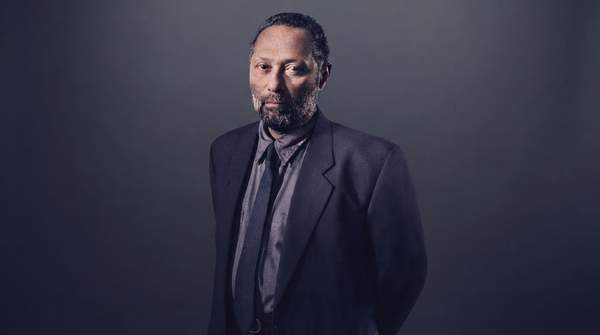

His unique position as a former Fidesz insider now leading a popular opposition movement means the challenge to Orbán's 16-year rule stems not merely from external forces, but from internal decay and growing disillusionment even within the establishment. Magyar's capacity to mobilize voters indicates significant fissures are forming within Orbán's power structure.

Ahead of crucial elections, AP secured an exclusive interview with Magyar. This strategic media engagement amplified his message and solidified his image as a direct challenger to Orbán's protracted tenure.

Orbán's Enduring Power and Electoral Hurdles

Viktor Orbán's 18-year leadership has forged a deeply entrenched political structure, according to The Guardian. Orbán's 18-year leadership allowed for the development of an electoral system that demonstrably favors the incumbent party.

Despite Tisza holding a double-digit lead over Fidesz in most polls for over 1.5 years, analysts suggest Hungary's electoral system could make the result tight, according to CNN. Despite Tisza holding a double-digit lead over Fidesz in most polls for over 1.5 years, Orbán's 18-year hold on power is not solely sustained by popular support. Rather, it rests on a deliberately engineered system designed to resist democratic shifts, meaning public sentiment does not directly translate to electoral victory.

The disparity between poll numbers and predicted outcomes underscores how systemic biases can impede electoral challenges. This poses significant hurdles for opposition movements, even when public opinion leans towards change.

The Future of Hungary's Political Landscape

Péter Magyar's Tisza party campaigns against corruption and Hungary's economic stagnation, according to CNN. Péter Magyar's Tisza party campaigns against corruption and Hungary's economic stagnation, issues that resonate deeply with an electorate demonstrating unprecedented engagement, revealing the core ideological and moral fault lines within Hungarian politics.

The election's outcome will directly shape the national focus on combating corruption and addressing economic challenges. The results will define Hungary's trajectory, determining a shift towards greater transparency and economic reform, or a continuation of its current course.

Regardless of the immediate electoral result, the intense focus on these issues ensures they will remain central to public discourse. Any future government will confront sustained pressure to address perceived systemic corruption and stimulate economic growth.

Who is Péter Magyar?

What is Péter Magyar's political background?

Péter Magyar is a former government insider who served in various state-owned companies and was married to Judit Varga, Orbán’s former justice minister. His political ascent began after his split from the Fidesz party in 2023, positioning him as a vocal anti-corruption figure.

Why is Péter Magyar considered a polarizing figure?

Péter Magyar is a polarizing figure even among his supporters, according to POLITICO Eu. Magyar's polarizing nature arises partly from his past association with the Fidesz establishment. His rapid ascent and assertive style have fostered both strong loyalty and significant skepticism, even within the broader opposition movement.

How might Magyar's polarizing nature affect Hungary's future politics?

Magyar's divisive nature implies any future leadership role he assumes would face intense internal and external scrutiny. This could complicate coalition building and guarantee continued robust public debate over his policies and leadership style, thereby shaping future political discourse in Hungary.

Regardless of the immediate outcome, the unprecedented voter engagement and the rise of Péter Magyar suggest that Hungary's political landscape will likely face sustained pressure for systemic change in the years to come.