Art

Nonprofit AI Artists Alliance Unveils Ethical Guidelines for Artistry

Today, the Nonprofit AI Artists Alliance (NAIAA), a global collective of over 10,000 creators, released its first comprehensive ethical guidelines for AI in art, urging developers to prioritize transp

MR
Matteo Ricci

April 10, 2026 · 4 min read

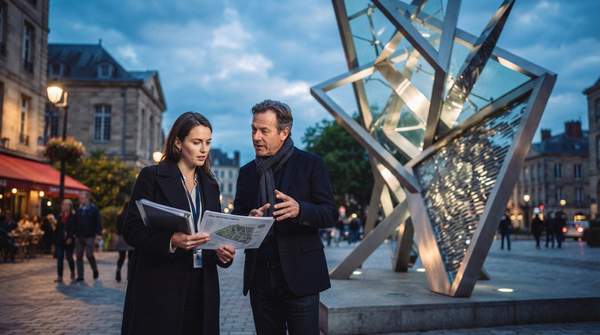
Human and AI artists collaborating on ethical guidelines for generative art, symbolizing the future of creativity and technology.

Today, the Nonprofit AI Artists Alliance (NAIAA), a global collective of over 10,000 creators, released its first comprehensive ethical guidelines for AI in art, urging developers to prioritize transparency and consent. This "Ethical Framework for Generative AI in Art," published Tuesday, culminates 18 months of consultations with artists, developers, and legal experts across 30 countries, according to NAIAA Press Release and Alliance Spokesperson. The framework emphasizes transparency, artist consent for data use, and fair attribution, notes the NAIAA Mission Statement and NAIAA Guidelines Overview. A non-profit organization is attempting to establish industry-wide ethical standards for AI art, but these guidelines are voluntary and face an industry driven by rapid commercial innovation. While this represents a significant step, its true impact will depend on widespread adoption and potential future regulatory backing, which appears uncertain.

What the New Guidelines Propose

The NAIAA guidelines propose specific recommendations for AI art development. They suggest AI models disclose training datasets, especially if copyrighted works were used without permission (NAIAA Section 2.1). A key provision calls for 'opt-in' consent for artists whose work trains future AI models, replacing implied consent (NAIAA Section 3.3). The framework also introduces a tiered attribution system: AI-assisted, AI-generated with human curation, and fully autonomous AI creations (NAIAA Section 4.2). It suggests a 'fair compensation' model for artists whose styles are mimicked by AI, proposing a royalty system (NAIAA Section 5.1). Developers should implement 'digital watermarking' or metadata tagging for AI-generated content (NAIAA Section 2.4). These provisions aim to establish clear boundaries and empower creators, directly addressing critical pain points for human artists in the age of generative AI. The collective impact of these measures could redefine intellectual property rights in the digital art sphere.

A Proactive Stance in a Regulatory Vacuum

The NAIAA guidelines offer a proactive stance amidst a regulatory vacuum. They are the first comprehensive framework developed by artists for artists, not tech companies, according to an Industry Analyst in ArtTech Review. The framework proposes a voluntary 'Ethical AI Art Certification' for compliant tools and platforms, potentially a market differentiator (NAIAA Section 6.1). The initiative arrives amid ongoing legal battles over AI's use of copyrighted material, making it a timely intervention, notes a Copyright Lawyer in a TechCrunch Interview. The guidelines advocate a 'human-in-the-loop' principle for critical artistic decisions, resisting fully autonomous AI art generation (NAIAA Section 3.1). The Alliance will host quarterly forums to update the guidelines, acknowledging AI's rapid pace (Alliance Spokesperson). The artist-led effort aims to shape the industry's ethical trajectory before formal regulation. However, without buy-in from dominant commercial AI art platforms, the guidelines remain largely symbolic, as the industry's future tools may operate outside these proposed ethical boundaries. This voluntary nature, coupled with lagging legal frameworks, perpetuates a regulatory vacuum that could leave artists unprotected.

Why Ethical Guidelines Are Needed Now

Ethical guidelines are urgently needed due to a rapidly evolving environment marked by controversy and absent frameworks. Recent lawsuits against AI art generators like Stability AI and Midjourney highlight legal and ethical ambiguities surrounding data scraping and copyright infringement (Reuters Legal Report). Legal uncertainty fuels widespread creator concern. A 2023 Artists' Rights Society survey found 78% of professional artists worried about AI's impact on their livelihoods and intellectual property. Major tech companies have been slow to implement comprehensive ethical guidelines, often citing 'innovation' as a barrier (2023 Artists' Rights Society survey; Google AI Ethics Report, 2022). Corporate hesitance leaves a significant void. The AI-generated art market is projected to reach $10 billion by 2030 (Market Research Future), attracting investment without clear ethical guardrails. Artists report feeling powerless against AI tools that mimic their styles without consent or compensation (Artist Interview in Art Forum). The guidelines thus emerge to fill a critical void left by both industry and government, aiming to prevent unchecked commercial exploitation.

The Path to Adoption and Impact

The NAIAA guidelines face considerable challenges for widespread adoption. Early reactions from AI art platform developers are mixed; some support ethical standards, others cite implementation costs (Developer Forum on Reddit). The fragmented response suggests the AI art industry risks a "wild west" scenario, where market power, not artistic consensus, dictates ethical standards. The NAIAA plans to lobby major tech companies and policymakers to integrate these guidelines into broader industry standards or future legislation (Alliance Spokesperson). Enforcement will rely on public pressure, artist advocacy, and platform self-regulation (Legal Expert in the AI Ethics Journal), placing a significant burden on individual creators. The Alliance is launching an educational campaign to foster demand for ethically sourced AI art (NAIAA Outreach Plan). Future iterations will address emerging technologies like real-time AI art generation (NAIAA Roadmap Document). Ultimately, the success of these voluntary guidelines hinges on widespread industry buy-in and their adaptability to AI's relentless evolution, a formidable task that could determine the future landscape of digital art.

Your Questions About the Guidelines, Answered

Are these guidelines legally binding?

No, the Nonprofit AI Artists Alliance guidelines are a voluntary ethical framework, not a legal mandate, according to the NAIAA FAQ Section. They serve as a set of best practices for the AI art community rather than enforceable laws.

How can I tell if an AI art tool adheres to these guidelines?

Artists and consumers can look for the 'Ethical AI Art Certification' badge on tools and platforms. The NAIAA also plans to publish an approved list of compliant platforms on its official website, as mentioned on the NAIAA Website.

Can I submit my own artwork to be excluded from AI training data?

The guidelines advocate for mechanisms that allow artists to opt-out of training data. The NAIAA provides resources and guidance for artists seeking to request data removal from some existing AI models, as detailed in NAIAA Artist Resources. This aims to give artists greater control over their intellectual property.

Without buy-in from major developers like Stability AI, the voluntary Nonprofit AI Artists Alliance ethical guidelines for 2026 will likely struggle to impose industry-wide change, leaving artists vulnerable to unchecked AI development through at least the next year.