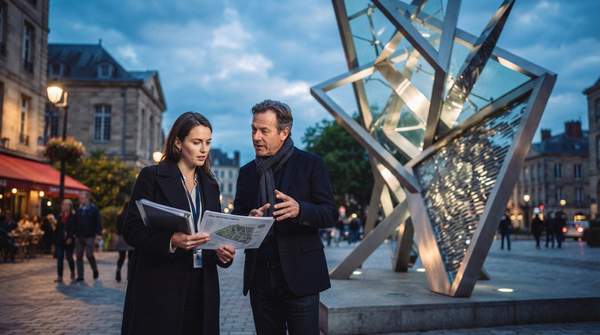
The Andy Warhol Foundation for the Visual Arts distributed nearly $5.2 million in spring 2026 grants to 78 visual arts organizations and institutions, according to Artforum. The nearly $5.2 million in spring 2026 grants to 78 visual arts organizations and institutions underscores ongoing foundational support for established art entities. In a contrasting development, Durham is piloting its inaugural artist-in-residence program for Parking Services, according to WUNC News. This highly specific initiative also includes artists creating artwork for the new Fire and EMS Station 19 and the Environmental & Street Services South (ESS South) facilities. These disparate funding avenues illustrate a complex and evolving arts economy.
Beyond these institutional and hyper-local initiatives, the Bloomington Arts Commission recently awarded $76,000 in arts project grants to various organizations and community groups, as reported by Fox 59. The blend of multi-million dollar institutional funding, targeted community awards, and highly specialized artist residencies highlights a robust yet fragmented funding environment. The opportunities range from significant organizational support to modest project-based awards, requiring diverse application strategies.
Funding for the arts in 2026 appears robust and diverse, yet the available opportunities are highly fragmented. The wide disparity in funding opportunities creates a complex environment for artists and organizations seeking support, forcing a nuanced approach to securing financial backing. The tension lies in balancing broad institutional stability with the granular needs of individual creative projects.
The arts funding ecosystem is becoming more complex and specialized, requiring artists and organizations to be strategic and adaptable in seeking support, rather than relying on a few broad channels. The increasing complexity and specialization of the arts funding ecosystem emphasizes the need for a nuanced understanding of where and how to access financial and developmental resources. It also inadvertently pushes individual artists into a 'gig economy' model, prioritizing transient, localized engagement over sustained, independent creative development.
Major Foundations Bolster Institutions and Professionals
Established foundations continue to provide substantial support to anchor the visual arts economy. The Andy Warhol Foundation for the Visual Arts, for example, distributed nearly $5.2 million in spring 2026 grants to 78 visual arts organizations, according to Artforum. The nearly $5.2 million in spring 2026 grants to 78 visual arts organizations signifies a sustained commitment to the operational stability and project execution of major cultural institutions and professional artistic endeavors, forming a critical upper tier of arts funding.
These large-scale grants are critical for sustaining the infrastructure of the arts sector, allowing institutions to maintain extensive exhibition schedules, robust educational programs, and broad public outreach initiatives. Such foundational support ensures that established entities can continue their work, providing a consistent and visible framework for artistic activity. The model of patronage involving large-scale grants often targets the institutional capacity to host, present, and preserve significant artistic output, rather than directly funding individual creative processes.
The commitment from major philanthropies like the Warhol Foundation helps preserve a tier of established organizations capable of executing long-term projects and supporting a broader artistic community through their programming. The institutional funding from major philanthropies often focuses on areas such as program support, exhibition development, and professional curatorial fellowships, fostering a professional ecosystem that benefits a select group of practitioners and administrators. The segment of the funding landscape represented by major philanthropies represents a more traditional model of arts patronage, distinct from the emerging, project-specific opportunities that increasingly define individual artist support.
The bifurcation of arts funding is evident in this approach, where substantial sums are directed towards organizational stability. While this ensures the longevity of key cultural venues, it also creates a challenge for individual artists who may not fit within the structures of these large institutions. Their funding pathways often diverge significantly, leading to a scramble for smaller, more fragmented grants that do not offer comparable long-term security or expansive project budgets.
The system of arts funding, where substantial sums are directed towards organizational stability, prioritizes the stability of organizational frameworks over direct, sustained income for independent creators. The significant investment in established institutions allows for ambitious projects and wide-reaching cultural engagement. However, it also means that many artists must look elsewhere for their primary sources of income, navigating a different, often more precarious, financial reality within the arts sector.
New Residencies and Individual Project Awards Emerge
The arts funding environment in 2026 also shows a growing emphasis on new residency models and significant project-based awards for individual artists, moving beyond purely institutional support. TED and POSCA, for instance, are launching a new artist residency program, as announced by ArtsHub UK. The new artist residency program launched by TED and POSCA highlights a trend towards partnerships between cultural organizations and commercial brands, creating unique developmental opportunities for creators that emphasize specific project outcomes and creative engagement.
Beyond traditional grants, organizations like Creative Capital offer substantial support directly to artists, fostering independent creative development. The Creative Capital Award provides individual artists with unrestricted project grants, which can reach up to $50,000, according to Creative Capital. The Creative Capital Awards, which provide individual artists with unrestricted project grants up to $50,000, empower artists to pursue innovative works without the stringent programmatic requirements often associated with larger institutional funding, offering a crucial lifeline for experimental and boundary-pushing art.
New residency programs and individual project awards signal an evolving landscape that diversifies funding beyond established institutional channels. They provide artists with dedicated resources to develop specific projects and engage in focused creative periods, often in new and unexpected contexts. The support from entities like TED/POSCA and Creative Capital aims to foster innovation and individual artistic growth, diversifying the pathways for artists to secure funding and develop their careers outside of conventional gallery or museum systems.
The new residency programs and individual project awards contribute significantly to what has become a 'portfolio career' approach for many artists. Instead of securing a single, substantial source of income, artists increasingly string together multiple small, project-specific grants and residencies. This might involve a $10,000 award from one source combined with a niche residency from another, requiring constant application and adaptation to varied project demands.
While not always as large as the multi-million dollar institutional grants, these awards offer significant capital for creative development and provide crucial time and space for artists. The awards, offering significant capital for creative development and crucial time and space for artists, represent a shift where artists are expected to be entrepreneurial, actively seeking out and combining diverse streams of support. The model of artists being entrepreneurial and combining diverse streams of support, however, can also lead to fragmented creative time, as artists move from one short-term engagement to the next, potentially impacting sustained, independent artistic exploration.
The trend towards specialized and project-based funding, often involving non-traditional partners, reflects a redefinition of public arts funding. It increasingly prioritizes direct community service and civic utility over purely aesthetic or critical artistic output, as seen in the Durham Parking Services residency. Artists are thus challenged to not only produce creative work but also to demonstrate its tangible value within specific social or civic contexts.
Navigating the Wide Range of Grant Opportunities
Artists and organizations in 2026 must navigate a vast spectrum of grant opportunities, which vary significantly in scale, purpose, and accessibility. Challenge America, for example, offers grants where applicants may only request $10,000, according to arts. Challenge America's grants, where applicants may only request $10,000, represent a distinct category of funding, focused on smaller, often localized projects with specific community engagement goals, yet it highlights the limited financial scope of many individual artist awards.
The stark contrast between these smaller project grants and the multi-million dollar institutional awards from foundations like the Andy Warhol Foundation reveals a growing disparity in the arts ecosystem. While organizational stability is prioritized through large grants, individual artists often face significant challenges in building sustainable careers without constant grant-seeking. The growing disparity in the arts ecosystem, evident in the stark contrast between smaller project grants and multi-million dollar institutional awards, creates a 'two-tier' system where the operational capacity of institutions is well-supported, but individual practitioners rely on a patchwork of modest awards.
The prevalence of awards under $10,000 or even $50,000 means that while the sheer number of funded projects far outstrips the number of projects receiving truly substantial, career-sustaining support, the total funding for individual artists is often fragmented. The fragmented total funding for individual artists, resulting from the prevalence of awards under $10,000 or even $50,000, forces many individual artists into a 'gig economy' model, where securing a living wage requires stringing together multiple small, project-specific grants.ants and residencies. This constant pursuit of transient engagements can detract from sustained, independent creative development, as artists are compelled to prioritize grant applications over artistic creation.
The Durham artist-in-residence for Parking Services, according to WUNC News, exemplifies this extreme shift towards hyper-localized and utilitarian artistic engagement. Such roles, while innovative, often come with modest compensation and require artists to integrate their practice into non-traditional civic functions, such as creating artwork for Fire and EMS stations or Environmental & Street Services facilities. This indicates a fundamental redefinition of public arts funding, prioritizing direct community service and civic utility over purely aesthetic or critical artistic output.
This dynamic challenges artists to develop strong proposal-writing skills and an acute awareness of the diverse funding streams available, from micro-grants to specialized residencies. Securing a living wage often involves stringing together several project-specific grants and residencies, a process that demands considerable time and strategic insight. Artists and organizations without the resources or strategic acumen to navigate this increasingly complex and specialized funding landscape risk being left behind.
The cultural sector, therefore, requires artists and organizations to be highly adaptable and resourceful to effectively navigate this complex financial landscape, ensuring their creative output continues despite fragmented support. The overall volume of available grants and residencies may suggest a robust funding environment, but the scale and nature of individual artist support often point to a 'feast or famine' reality for practitioners, demanding constant vigilance and strategic application for art center grants and residencies in 2026.
The current funding model for art center grants and residencies in 2026, characterized by a mix of large institutional support and numerous smaller, project-specific awards, creates distinct challenges for individual artists. This fragmentation means that by the close of 2026, many artists will have increasingly adopted a 'portfolio career' strategy, stitching together various modest grants and residencies to sustain their creative work, rather than relying on single, comprehensive funding sources. The ongoing evolution of funding initiatives, exemplified by specialized programs like Durham's artist-in-residence program and the continued significant investment from The Andy Warhol Foundation, confirms a sustained shift towards diverse and often utilitarian artistic engagement, demanding new strategies from artists well into the future.