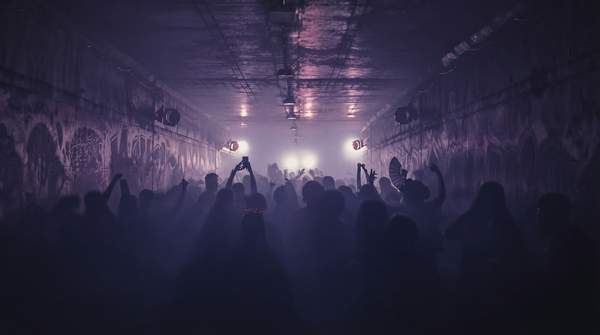
Witch house is a dark electronic microgenre that emerged online in the late 2000s, built from slow, heavy beats, unsettling synthesizers, heavily processed vocals, and an eerie visual aesthetic rooted in occultism and early internet glitch art. Despite its name, it has little to do with club house music. Its strongest influences come instead from hip-hop—particularly Houston's chopped and screwed tradition—gothic atmosphere, and horror imagery. Understanding the genre means seeing how these ingredients interact rather than simply listing them.
The Emergence of Witch House: An Internet-Native Genre
Witch house developed through online music communities rather than one clearly defined city or nightclub. As one account of the genre puts it, witch house emerged in the late 2000s "not from mainstream clubs or radio stations, but from the corners of online music forums, MySpace profiles, and the DIY scenes that thrived on digital experimentation." The name itself emerged around the end of the 2000s, and it functions as a pun on house music even though the sound bears little resemblance to it.
This internet-native origin is central to the genre's identity. Unlike genres that grew out of physical scenes, witch house was shaped by the digital spaces where its early artists shared music directly with listeners. The cultural mood drew on paranormal films such as The Blair Witch Project and Twin Peaks, along with horror-themed pop culture references, according to a genre guide from the electronic music site 6AM. That mix of online distribution and dark pop culture gave the genre its distinct, insular character.
Rhythmic Foundation: Slowed Beats and Hypnotic Grooves
The genre's rhythmic core comes from hip-hop, not dance music. Witch house takes the "chopped and screwed" style pioneered by Houston rapper and producer DJ Screw and significantly slows the tempo, using skipping, stop-timed beats. DJ Screw's sampling technique is regarded as a foundational influence on the genre.
Where house music is fast and upbeat, witch house inverts that tendency: hip-hop rhythms are slowed to a crawl, producing slow, heavy, hypnotic grooves. This rhythmic foundation is what makes the genre feel simultaneously familiar and unsettling—the listener recognizes a hip-hop pulse, but stretched and distorted into something heavier and more disorienting. It is the structural anchor on which the genre's other elements are layered.